

Yountville did not lose its children all at once. It lost them slowly, politely, and under the cover of preservation, prosperity, second homes, low-occupancy houses, and a visitor economy that learned how to celebrate guests while pushing workers farther away.
This piece begins before Yountville was Yountville: with Rancho Caymus, the Veterans Home, the railroad, the highway that spared Washington Street, and the Agricultural Preserve that saved Napa Valley from becoming ordinary California. That preservation was real. Its achievement was real. But so was the bargain hidden inside it.
If the valley floor would be protected from sprawl, then the towns had to become mature enough to hold the people the protected economy required. Yountville never fully made that second move. Over time, the family houses aged in place, the workers commuted from elsewhere, the second homes multiplied, and the elementary school finally said what civic nostalgia could not: a town without enough children nearby is not simply changing. It is failing to replace itself.
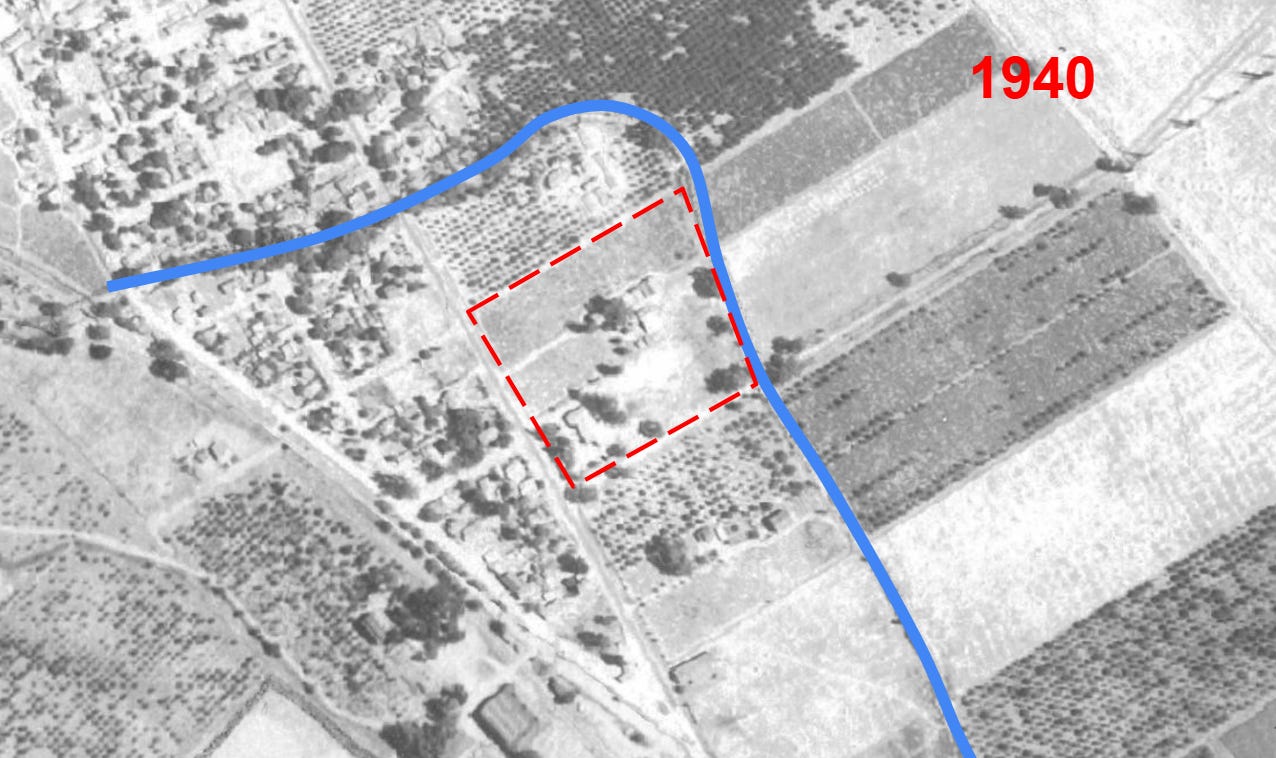
This 1940 aerial photo shows the school on the edge of Yountville. It was surrounded by orchards that would eventually be replaced with subdivisions full of working families. The old school did not close because people stopped loving Yountville. It closed because love, memory, and beautiful streets are not housing policy. A town can preserve its surfaces and still lose the succession of lives that made those surfaces meaningful.
This essay is the backstory to the Yountville housing debate: not an accusation, but an autopsy. It’s not complex. The children and their parent
s went where the housing was affordable.